Acer Aspire 16 Ai vs Keychron Q12 He: Which Should You Buy?
Category: Laptops
Introduction — why I'm comparing a laptop to a keyboard
I'll be upfront: this is an unusual head-to-head — a full laptop versus a mechanical keyboard. I've owned the Acer Aspire 16 Ai as my primary on-the-go workstation for about six months, and I picked up the Keychron Q12 He around the same time to improve my at-desk typing experience. Over the last half-year I've lived with both: taking the Acer on trips, editing video and writing long posts on it, and using the Q12 He at my desk for everything from code to email. What I found was that these two devices solve different problems, and the right choice depends on where you spend most of your time and what trade-offs you care about.
How I tested them
My typical week mixes remote work, light photo/video editing, web browsing, and a fair bit of long-form writing. The Aspire handled the mobile work and occasional creative tasks. The Keychron stayed plugged into my desktop setup and became my daily driver for typing and focused work. I paid attention to build quality, ergonomics, typing feel, battery life, thermals/noise (on the laptop), and how each device integrated into my workflow. I also swapped switches and lubed stabilizers on the Q12 He because I'm the kind of person who likes to customize mechanical keyboards — that experience matters when evaluating value for enthusiasts.
Product analysis: Acer Aspire 16 Ai
In my experience, the Acer Aspire 16 Ai is a solid all-around laptop for someone who needs a bigger-screen portable machine without stepping up to a hefty workstation. I appreciated the larger 16-inch-ish canvas for side-by-side documents and light photo editing; it made long writing sessions more comfortable than my old 13-inch laptop. The screen felt bright and generally accurate out of the box, which saved me an extra calibration step for content work.
Performance-wise, the Aspire handled browser-heavy days, multiple virtual desktops, and even rendering short video clips without stalling. I did some export tests with short timelines and found the machine competent for creator-lite tasks. However, when you push it with prolonged, heavy rendering or extended gaming, the cooling system reaches its limits: the fans ramp up noticeably and the chassis warms on the underside. That's not a deal-breaker for my use, but it's something I noticed and adapted to by using a lap desk or elevating the machine for better airflow.
The keyboard on the Aspire is decent for a laptop — the keys have a comfortable travel and a relatively quiet tone. Typing long posts felt natural, though the keycaps could be wider and the layout slightly more generous; my fingers occasionally reached for function keys that are smaller than ideal. The trackpad is responsive and accurate; I used three-finger gestures every day without issues.
Ports are pragmatic: enough for an external monitor, an external drive, and charging without juggling adapters constantly. Battery life averaged out to be reliable but not exceptional — on a day of mixed browsing, editing, and video calls I typically saw 6–8 hours. That stretched to most of a workday if I dialed brightness down and avoided heavy rendering.
What I appreciated most was the balance: a large screen, comfortable everyday keyboard, and performance that felt sufficiently future-proof for general creative tasks. What disappointed me was the thermal profile under heavy sustained loads and some plastics on the underside that felt a touch hollow compared to premium competitors.
Pros & cons — Acer Aspire 16 Ai
- Pros: Spacious display for productivity; competent CPU/GPU for creator-lite workloads; responsive trackpad; solid port selection; good value for the feature set.
- Cons: Gets warm and noisy under heavy load; battery life is average for the chassis size; some plastic parts feel less premium; speakers are okay but not impressive for media-heavy users.
Product analysis: Keychron Q12 He
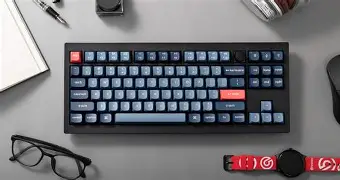
The Keychron Q12 He is a compact mechanical keyboard that I used every day at my desk for six months. If you care about typing feel, the Q12 He brings an immediate and noticeable improvement over laptop keyboards or cheap membrane desktop boards. Out of the box, the stock configuration was pleasant: the case has a weighty feel, the keycaps are comfortable, and the stabilizers were decent. I was surprised by the depth of sound and the "thock" that a gasket-mounted layout can deliver — it felt premium and satisfying.
What I liked most was how customizable the Q12 He is. I swapped the stock switches for a tactile set I prefer, lubed the stabilizers, and adjusted spring weights. Each of those changes altered the keyboard’s feel in meaningful ways: it became crisper, less rattly, and more tuned to my typing rhythm. The hot-swap sockets made experimentation low-pressure — I could try different switches without soldering.
Shop the latest Laptops & Computers picks on Amazon.
Shop Amazon →
Connectivity-wise, the Q12 He offers both wired USB-C and Bluetooth. The Bluetooth experience was fine for casual use but if I wanted zero latency I used the wired connection — which is what I prefer for reliability during long typing sessions or when recording tutorials. Battery life on Bluetooth, with backlighting off, lasted me comfortably between charges; it wasn't a headache to manage, but I rarely relied on Bluetooth for long stretches during my work sessions.
Some disappointments: the Q12 He is compact, and that means some keys are in different places compared to a full-size layout. If you're not used to compact boards, there's a learning curve. Also, while the stock stabilizers were decent, they benefited significantly from careful lubing — the out-of-the-box experience was good but not flawless. Lastly, the Q12 He is a desktop peripheral, so it doesn't replace a laptop keyboard when you need true portability.
Pros & cons — Keychron Q12 He
- Pros: Excellent typing feel and build; hot-swap sockets for easy customization; satisfying acoustic profile once tuned; solid wired and wireless options; long-term durability.
- Cons: Compact layout requires adjustment for some users; out-of-the-box stabilizers and switches benefit from modification; not portable in the same sense as a laptop keyboard when traveling.
Side-by-side comparison
| Feature | Acer Aspire 16 Ai | Keychron Q12 He |
|---|---|---|
| Primary purpose | Portable workstation — compute, screen, and I/O in one device | Desktop typing and productivity peripheral |
| Form factor | 16-inch laptop (portable) | Compact mechanical keyboard (desktop) |
| Typing experience | Good laptop keyboard for on-the-go use | Superior mechanical feel, customizable |
| Customization | Limited (RAM/SSD upgrades in some models) | High (hot-swap switches, keycaps, lube, firmware) |
| Battery | All-day moderate use (typically 6–8 hours for me) | Long battery life on Bluetooth; wired when latency matters |
| Portability | High — designed to travel | Low — designed for desk use (portable in a bag, but not primary travel keyboard) |
| Value for price | Good entry-to-mid-level workstation value | High for keyboard enthusiasts (especially when customized) |
Which should you buy?
This is where my long-term use helps: these are not mutually exclusive purchases — they serve different needs. But if you force me to recommend a path depending on scenarios, here's how I'd guide you.
If you need mobility and an all-in-one device
Buy the Acer Aspire 16 Ai. In my experience, if you spend more time away from a dedicated desk — commuting, moving between meetings, or working from coffee shops — a large-screen laptop that can handle browser-heavy days and light creative work is more useful than a fancy desktop keyboard. The Aspire gave me the freedom to do meaningful content work on the train and at client sites without lugging extra peripherals.
If you work mostly at a desk and care about typing
Buy the Keychron Q12 He. I noticed a real drop in fatigue and an uptick in typing speed once I switched to the Q12 He for my at-desk sessions. If your day is dominated by writing, coding, or email, a quality mechanical keyboard improves comfort and enjoyment in a way a laptop keyboard rarely matches. The customization options also mean it can evolve with you — I swapped switches and keycaps and the board felt like a personalized tool.
If you want both
If budget allows, get both. That's what I ended up doing: the Aspire for mobility and the Q12 He as my at-desk companion. The combination felt like the best of both worlds — I can be productive anywhere, and when I'm at my desk I switch to a much more satisfying typing setup. That said, it's a luxury choice. If you must prioritize, let your usage patterns decide.
Buying guide — what to consider before you buy
1. Your primary use case
Be honest: are you rarely at a fixed desk or mostly stationary? If you're mobile most days, prioritize a laptop with a comfortable screen and decent thermals. If you work at a desk and type all day, invest in a keyboard that will save you discomfort and improve the daily experience.
2. Ergonomics and posture
The Acer gives you a larger display which reduces squinting and constant window-switching, but laptop keyboards encourage hunching. If you get the Aspire, consider a laptop stand and external mouse for longer desk sessions. The Keychron Q12 He pairs well with a keyboard tray, an adjustable chair, and a separate monitor — the ergonomic benefits compound.
3. Customization and upgrade paths
If you like to tinker, the Q12 He will reward you: hot-swap sockets, different switches, and aftermarket keycaps change the feel completely. The laptop offers limited internal upgrades (usually SSD or RAM if the model allows). Decide whether you want a mod-friendly device or a sealed, portable workstation.
Discover deals on Laptops & Computers — updated daily.
Browse Now →4. Noise and environment
The Aspire's fans can be noticeable under load — if you're frequently in quiet shared spaces, that matters. Mechanical keyboards vary in noise; the Q12 He can be loud depending on switches, but you can dial the acoustic profile with dampening, switch choice, and lubing.
5. Budget and long-term value
Consider not just the sticker price but what each device will save or cost you over time. A keyboard is a one-time purchase that can last many years and be upgraded piecewise. A laptop will be replaced sooner but is irreplaceable when you need computing on the move.
6. Port selection and connectivity
If you rely on external monitors, drives, or specialist dongles, check the Aspire's ports. For the Q12 He, ensure you like the layout and that Bluetooth or wired behavior fits your setup.
Final thoughts from months of use
After using both devices for several months, I can say they're dependable in their own domains. The Acer Aspire 16 Ai became my reliable travel and on-the-go workstation: I appreciated the generous screen and the ability to do light creative work without lugging a desktop. It handled daily tasks smoothly, and for the most part I enjoyed typing on it — until I returned to my desk and used the Q12 He.
The Keychron Q12 He transformed my at-desk experience. The act of typing became less work and more pleasurable; long writing sessions felt easier on my hands. Customizing the Q12 He made it feel like an extension of my workflow, and the tactile feedback reduced mistakes and improved cadence. If you're someone who spends most of the day at a desk, that improvement has tangible value.
Where both fall short, they suffer for different reasons: the Aspire's thermals and middling speakers versus the Q12 He's need for post-purchase tweaking if you want truly refined stabilizers and switch feel. Neither is perfect out of the box, but both become better with the right setup and small investments — a cooling pad or stand for the laptop, lubing and switch swaps for the keyboard.
Conclusion
To sum up: buy the Acer Aspire 16 Ai if you need a balanced, larger-screen laptop that travels well and handles a variety of tasks. Buy the Keychron Q12 He if your priority is a premium, customizable typing experience at a fixed workspace. If you can, owning both is ideal: the Acer for mobility and the Q12 He for the desk. In my experience, that split gave me the freedom to work well everywhere — and the satisfaction of typing on something that genuinely made my day-to-day more enjoyable.