Coros Nomad Specs, Features, and Value: Is it worth the price tag?
Introduction
The Coros Nomad enters the crowded outdoor smartwatch market with a focus on endurance athletes, backcountry enthusiasts, and everyday users who prioritize battery life and straightforward, performance-oriented features. This article examines the Nomad from multiple angles: design and materials, hardware specifications, fitness and navigation features, software and ecosystem, real-world use cases, and, crucially, whether the Nomad delivers value for its price point. The goal is to provide an evidence-based, practical assessment that helps potential buyers decide whether the Nomad aligns with their needs.
Product overview and headline specifications
Rather than reproduce a spec sheet line-by-line, this section summarizes the Nomad’s essential characteristics in categories buyers routinely evaluate. These are the attributes that most influence day-to-day experience.
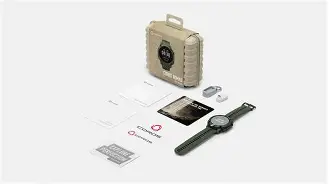
- Design and build: Rugged construction aimed at outdoor use, with premium case materials available in higher trims and an emphasis on light weight for long-duration wear.
- Display: Readable outdoor display optimized for sunlight visibility and power efficiency; user-adjustable brightness and watch-face customization.
- Battery performance: A major selling point — the Nomad positions itself toward multi-day or multi-week runtime depending on usage profile and GPS mode.
- Sensors and connectivity: GPS/GLONASS/Galileo support for navigation, pulse-based heart rate, barometric altimeter, compass, and common Bluetooth/Wi‑Fi pairing options for phone integration.
- Navigation and mapping: Turn-by-turn navigation, breadcrumb trails, route import, and offline map support in higher-end firmware or models depending on configuration.
- Training and activity tracking: Core multisport modes, advanced metrics for running and cycling, structured workouts, and recovery insights.
- Software ecosystem: A companion app and web portal for data review, training plan sync, and firmware updates; community and third-party integrations vary versus larger incumbents.
Detailed analysis
Design and ergonomics
The Nomad’s design philosophy emphasizes comfort during extended wear. Case shapes are usually rounded to reduce snagging on sleeves, and the lug-to-lug length is balanced to suit a broad range of wrist sizes. Coros offers multiple strap materials—silicone for training, textile or leather for everyday wear—so buyers can configure the watch for mixed-use environments.
Weight is an especially important metric for endurance athletes; a lighter watch reduces fatigue over long outings. The Nomad aims for a middle ground between ultra-light fitness watches and heavier, feature-packed expedition watches, which makes it suitable as a daily driver for many users who also want serious outdoor capability.
Display and readability
Coros prioritizes outdoor visibility. The screen is engineered for legibility in direct sunlight, which is critical for trail runners and hikers who often check data under bright conditions. The user interface balances glanceable stats with customizable data fields. For buyers who prefer a large, vivid AMOLED experience for notifications and maps, the Nomad’s display implementation should be evaluated against that preference—some users favor sharper color and deeper blacks, while others prioritize battery life and sunlight readability.
Battery life and power management
Battery longevity is where the Nomad typically stands out. Coros tends to optimize firmware and power profiles to eke maximum runtime from a single charge. In practice, users can expect the Nomad to last substantially longer than many feature-rich competitors when relying on conservative GPS modes and sparse backlight usage.
Power management options—such as configurable GPS sampling, background sensor intervals, and an efficient low-power watch mode—make it easier to tailor battery life to activity. For multi-day treks or ultra-distance events, battery management is more important than headline battery numbers; the Nomad’s combination of efficient hardware and configurable settings supports practical endurance use.
GPS, navigation, and mapping
Accurate positioning and reliable route-following are core requirements for outdoor watches. The Nomad provides support for multiple GNSS constellations and offers route import via common formats. For backcountry navigation, features like breadcrumb trails, POI marking, and basic route recalculation are essential; the Nomad covers these fundamentals while keeping the interface focused and uncluttered.
Where mapping matters (detailed topographic layers, on-device vector maps, and robust route planning), buyers should check whether a given Nomad firmware or trim includes offline maps or whether maps are delivered via companion app sync. For alpine navigation, pairing with a phone-based mapping app is an option, but some users prefer on-watch maps for offline reliability.
Performance and training features
Coros has long targeted athletes with precise training metrics and easy-to-use workout flows. The Nomad supports structured workouts, interval training, and sport-specific modes such as running, trail running, cycling, hiking, and swimming. Advanced metrics—vo2max estimations, training load, and recovery recommendations—help athletes plan progression, though the depth of analysis remains less elaborate than some higher-tier platforms.
Coached plans, automatic activity detection, and race prediction features vary by firmware and companion app support. Runners and cyclists who want deep performance analytics or seamless third-party platform sync should verify compatibility with their preferred training ecosystems.
Shop the latest Electronics picks on Amazon.
Browse Now →Health and sensors
Health monitoring includes continuous heart rate tracking, sleep staging, and stress or recovery indices based on heart rate variability. A barometric altimeter and electronic compass add situational awareness for outdoor activities. For many users, sensor accuracy is serviceable for training and navigation; however, users who rely on medical-grade readings or clinical-level heart rate data should consult specialized devices.
Software and ecosystem
Coros provides a companion app for activity review, route planning, firmware updates, and account management. The app’s interface emphasizes clarity and rapid access to workout history. Compared with larger ecosystems, Coros’s platform is leaner—trade-offs include fewer third-party app integrations and a smaller app marketplace, but users gain responsiveness and straightforward data flows.
Firmware cadence is important. Coros has a track record of ongoing updates that add features and fix bugs; prospective buyers should consider the company’s update history as part of the value assessment.
Durability and warranty
Outdoor-focused construction means the Nomad is designed to tolerate sweat, rain, and rough handling. Water resistance to typical swim/run depths and robust glass materials are expected. Warranty terms and customer service responsiveness can influence long-term ownership satisfaction; buyers should review warranty length and support channels prior to purchasing.
Real-world use cases
The Nomad is targeted at several overlapping buyer personas. Below are common practical scenarios and how the watch fits them.
Trail and ultramarathon runners
Long runtime, accurate GPS tracking in variable terrain, and a lightweight feel make the Nomad attractive to ultra-distance runners. Configurable power modes allow athletes to extend battery life in races that exceed single-day durations. Simpler, distraction-free interfaces are often preferred in competition, and the Nomad’s focus on essential metrics aligns with that need.
Backcountry hikers and multi-day trekkers
For multi-day navigation without frequent charging, the Nomad’s efficient battery and breadcrumb navigation are practical. The ability to mark waypoints, view basic topographic data (depending on model/firmware), and monitor elevation/trends can be critical during long treks where phone power is conserved for emergency use.
Triathletes and multisport athletes
Swimming, cycling, and running modes make the watch suitable for triathletes who need swim metrics, open-water tracking, and quick transitions. Swimmers should verify stroke detection and pool vs. open-water accuracy based on their training type.
Everyday fitness and smartwatch replacement
Casual users who want a rugged smartwatch for day-to-day wear—step counting, sleep tracking, notification support, and weekend hikes—will find the Nomad a capable companion. Its battery life reduces the friction of daily charging compared with more power-hungry color-screen smartwatches.
Pros & Cons
- Pros:
- Long battery life optimized for endurance use
- Rugged build with a focus on outdoor durability
- Clear, sunlight-readable display with configurable data fields
- Reliable core GPS and navigation features for backcountry use
- Focused software experience with frequent firmware updates
- Cons:
- Smaller ecosystem and fewer third-party integrations than some competitors
- Advanced mapping and topographic detail may be limited on-device depending on model
- User interface and companion app are streamlined but less feature-dense for deep analysis
- Some buyers may prefer richer smartwatch features (apps, payments, music) found elsewhere
Comparison table
The table below situates the Coros Nomad against representative alternatives across common buyer concerns. Ratings are qualitative and reflect typical trade-offs seen in this product category.
| Model / Category | Battery (practical) | Navigation & Maps | Training & Metrics | Ecosystem & Integrations | Value positioning |
|---|---|---|---|---|---|
| Coros Nomad | Excellent — optimized for long outings | Very good — core navigation, route import | Very good — structured workouts, endurance metrics | Good — lean app, fewer third-party apps | Competitive — strong battery-to-price tradeoff |
| High-end Garmin (e.g., Fenix/Epix) | Good to Very Good — varies by mode | Excellent — rich on-device maps and routing | Excellent — deep analytics, third-party app ecosystem | Excellent — widespread integrations | Premium — higher price, broad feature set |
| Polar Grit X / Vantage | Good — strong battery management | Good — route navigation, less detailed mapping | Very good — robust training science and recovery | Good — focused integrations, solid coaching tools | Mid to high — targeted at serious athletes |
| Suunto (outdoor models) | Good — designed for outdoors | Very good — solid navigation, mapping options | Good — strong tracking, fewer advanced metrics | Good — established outdoor community | Mid to high — rugged outdoor focus |
Buying guide: who should consider the Nomad?
Choosing a smartwatch is about matching device strengths to personal priorities. Below are practical questions and considerations to help determine whether the Nomad is a fit.
Looking for the best Electronics deals on Amazon?
View Offers →1. Is battery life a priority?
If multi-day autonomy is critical—ultra-distance races, overnight backpacking, or frequent travel without reliable charging—the Nomad should be near the top of the shortlist. Buyers who charge nightly and prioritize smartwatch ecosystems may not need the extreme battery focus.
2. How important is on-device mapping?
For users who rely on detailed topographic maps and complex on-watch route planning, investigate whether the specific Nomad firmware or configuration includes offline maps or whether the workflow requires syncing routes via a phone. If on-watch maps are mission-critical, compare map feature depth versus premium competitors.
3. Do training and recovery insights matter?
Endurance athletes will value structured workouts, training load, and recovery guidance. The Nomad provides competent features in this area, but those seeking the most comprehensive analytics and abundant third-party training ecosystem may find premium competitors stronger in raw analytics capability.
4. Is a lightweight, unobtrusive profile needed?
Users who wear the watch all day and night—sleep tracking, office, and active use—benefit from a lighter case and comfortable strap options. Verify case dimensions and try-on options when possible.
5. How much does the companion ecosystem matter?
Some buyers depend on integrations with coaching platforms, cycling power data ecosystems, or specific third-party apps. Coros integrates with common platforms, but if a niche integration is required, check compatibility before committing.
Accessories and extras to consider
- Alternate straps (quick-release) for sport and casual wear
- External charging packs for extended expeditions
- Protective bezels or screen protectors for abrasive environments
- Optional premium materials (titanium cases, sapphire glass) if offered and if durability outweighs cost
Price and value assessment
Value is relative: some buyers equate value with a rich feature set regardless of price, while others view value as delivering the highest performance for a given cost. The Nomad positions itself toward buyers who favor endurance capability and reliable core features over an exhaustive app marketplace or flashy consumer smartwatch extras.
When evaluating whether the Nomad is "worth the price tag," consider these points:
- If battery life and dependable GPS/navigation for long outings are the top priorities, the Nomad often represents strong value versus competitors with similar durability but shorter battery life.
- If on-device mapping richness, a wide third-party app catalog, or advanced smartwatch features (payments, music streaming, large app stores) are decisive, the Nomad’s narrower focus may make competitors better value despite higher price points.
- Firmware update cadence and manufacturer support can add long-term value; a product that receives meaningful updates and bug fixes provides more value over several years than a similar device with stagnant software.
Conclusion
The Coros Nomad is a compelling choice for endurance athletes, backcountry users, and buyers who prioritize battery life, reliable navigation, and a focused, performance-first experience. It trades some breadth of ecosystem integrations and on-watch mapping depth for efficient hardware, a clear interface, and extended runtime—attributes that matter most in long-duration real-world use.
For those who need the most complete map-based navigation and an expansive third-party app selection, premium alternatives may justify their higher cost. But for users whose day-to-day and expedition needs center on practical endurance performance and straightforward training features, the Nomad delivers strong value. Prospective buyers should match the Nomad’s strengths to their primary activities, check for the specific features and firmware capabilities relevant to their use, and consider trying the watch on for fit and ergonomics before purchase.