Don't Buy the Honeybook Crm Until You Read This Full Analysis
Introduction
HoneyBook CRM has become a frequently discussed option among small service businesses, independent consultants, and creative professionals. Placed here in the Electronics category, this analysis examines HoneyBook through the lens of electronics-focused buyers — repair shops, hardware startups, embedded-systems consultants, and independent electronics contractors ��� as well as general small-business concerns. The goal is to present a clear, balanced assessment of HoneyBook’s strengths and limitations so decision-makers can judge whether it aligns with their operational needs before committing to a subscription.
What HoneyBook Is (and Is Not)
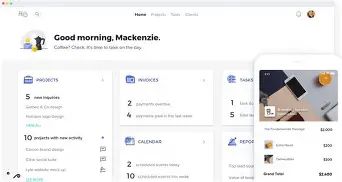
At its core, HoneyBook is a client management platform that combines CRM features with project workflows, contract templates, invoicing, and basic automation. It targets solopreneurs and small teams who need a single place to track leads, send proposals and contracts, accept payments, and manage client communications. For many creative and service businesses, this consolidation simplifies day-to-day work.
However, HoneyBook is not a full enterprise CRM, a dedicated accounting system, nor an inventory management solution. Buyers in the electronics domain should weigh which of those capabilities matter most: the platform excels at client-facing workflows but often requires complementary tools for inventory, manufacturing planning, or complex accounting.
Detailed Product Review and Analysis
Interface and Usability
HoneyBook offers a streamlined, modern interface designed for non-technical users. The onboarding flow focuses on setting up client intake forms, templates, and a basic project pipeline. For small electronics businesses that prioritize speed of setup — such as a mobile device repair shop or a freelance hardware consultant — this low-friction approach is appealing.
That said, the simplicity can be limiting. Buyers who require deep customization of record types, complex relational data between projects and BOMs (bills of materials), or advanced role-based permissions for larger teams will find the out-of-the-box experience constrained.
Client Management and Pipelines
HoneyBook’s CRM features center around tracking inquiries as projects, moving them through a visual pipeline, and attaching proposals, contracts, and invoices to each client record. For customer-facing electronics services (repair orders, warranty claims, and client consultations), this unified view reduces administrative overhead and keeps communication history in one place.
However, the handling of productized services or repeat orders (typical in repair shops) is not as robust as dedicated POS or repair-shop management systems. Items and line-level inventory are handled only in a rudimentary fashion, which means businesses that need barcode tracking, parts-level costing, or serial-number tracking must supplement HoneyBook with other systems.
Proposals, Contracts, and Payments
HoneyBook provides template-driven proposals and legally-oriented contract tools with e-signature capability and integrated payment acceptance. This is attractive to electronics consultants who must formalize scopes and collect deposits before project work begins. The integrated flow from proposal to contract to invoice shortens conversion time and improves the client experience.
Buyers should note the platform’s payment capabilities are designed for typical service transactions. For sellers of physical electronics components or sellers who need to manage split shipments, fulfillment, or marketplace-style payouts, the payment workflow lacks those specialized controls.
Automation and Workflows
Basic automation is available: automated reminders, follow-up sequences, and triggers tied to project status changes. This is ideal for managing repair turnaround communications (e.g., notifying clients when diagnostics complete) or for reminding clients about outstanding invoices. The automation keeps routine communications consistent without manual intervention.
Find top-rated Electronics products at great prices.
See Deals →Advanced automation, such as scripting complex multi-step integrations across manufacturing ERPs or custom inventory updates, is outside HoneyBook’s intended use. Businesses that anticipate extensive automation connected to production lines or supply-chain systems should plan for middleware or integration layers.
Integrations and Extensibility
HoneyBook supports integrations with common calendaring, email, and payment services, and often connects with third-party tools via general-purpose integration platforms. For electronics professionals, integrations with scheduling (for service appointments), file sharing (for CAD or test reports), and accounting are the most relevant.
There is limited support for deep, native integrations with inventory or manufacturing systems. If a business relies on complex third-party tools (e.g., ERP, specialized accounting software with custom tax rules, or inventory management with serialized parts), expect to architect an integration strategy rather than rely on turnkey connectors.
Reporting and Analytics
Reporting focuses on revenue, booking activity, and basic project statuses. This suffices for monitoring cash flow, estimating monthly bookings, and tracking conversion from inquiry to paid project. Electronics businesses that need granular cost-of-goods-sold (COGS), margin analysis by component, or production throughput metrics will find reporting insufficient and will need to export data to accounting or BI tools.
Security and Data Portability
HoneyBook follows standard security practices for SaaS products, including encrypted communications and protections for stored client data. Buyers should verify compliance requirements specific to their geography or industry (for instance, data residency or sector-specific regulations) before adopting any cloud CRM. The platform provides data export options, but migrations that include custom fields or attachments may require careful planning.
Support and Community
HoneyBook offers customer support resources, templates, and knowledge-base documentation aimed at small-business users. The community aspect — user forums and template sharing — can be helpful for businesses that want to adopt best practices quickly. For electronics organizations with niche operational needs, support will be most useful for learning how to adapt existing templates rather than building custom workflows from scratch.
Real-World Use Cases (Electronics Focus)
- Independent Repair Shops: Use HoneyBook to manage customer intake, track repair status, present estimates, and collect payments. The platform simplifies the communication loop between technicians and clients, but it does not replace specialized repair-shop software for inventory and parts tracking.
- Hardware Product Consultants: Manage client engagements, milestone-based invoices, NDAs, and design-review meetings. The proposal-to-contract workflow reduces administrative friction when engaging multiple small clients on prototype builds.
- Small Contract Manufacturers / Assembly Services: Use HoneyBook for initial client onboarding and quoting of service fees. However, production scheduling, BOM management, and component procurement still require manufacturing-focused systems.
- Electronics Field Technicians: Schedule visits, collect signatures on completion, and invoice on-site using mobile access. The mobile experience supports service businesses where field efficiency matters.
Pros & Cons
Pros
- Streamlined client-facing workflows: proposals, contracts, and invoices in a single place
- Intuitive interface that shortens onboarding for non-technical staff
- Built-in e-signatures and payment acceptance accelerate cash collection
- Useful template library for quick setup of standard business documents
- Automation for routine client communications reduces manual follow-up
Cons
- Limited inventory and parts management — not a replacement for specialized repair or manufacturing systems
- Reporting lacks deep cost and margin analysis needed for product-heavy businesses
- Customization and advanced automation are constrained compared with mid-market CRMs
- Scaling to larger teams or complex permission models can be challenging
- Dependence on external integrations for accounting, manufacturing, or ERP functionality
Comparison Table: HoneyBook vs. Typical Alternatives
| Feature | HoneyBook | Dubsado (Alternative) | Zoho CRM (Alternative) | HubSpot CRM (Alternative) |
|---|---|---|---|---|
| Primary focus | Client workflows and proposals for freelancers and small teams | Client management and automation for creatives | Full-featured CRM with customization | Free-to-paid CRM with strong marketing tools |
| Billing & payments | Integrated invoicing and payment acceptance | Similar proposal + invoicing flow | Invoicing via integrated apps; more accounting integrations | Basic invoicing integrations; stronger marketing-tracking |
| Inventory & manufacturing | Very limited | Very limited | Available via extensions/modules | Requires integrations |
| Best for | Freelancers, repair shops, small service teams | Small creative businesses and consultants | Growing sales teams needing customization | Businesses wanting a free CRM with marketing add-ons |
| Ease of setup | High | High | Moderate to low (more configuration) | Moderate |
| Scalability | Small to medium teams | Small teams | Mid-market to enterprise | Small to enterprise with add-ons |
Buying Guide: How to Decide if HoneyBook Fits an Electronics Business
1. Identify Core Needs
First, list critical operational needs. Is the priority customer intake and faster contract signing, or is it inventory and parts-level cost management? HoneyBook is a strong fit if the primary need is simplifying client communication, proposals, contracts, and payments. If the business depends heavily on parts tracking, serialized inventory, or production scheduling, HoneyBook should be paired with a specialized system.
2. Evaluate Workflows
Map typical customer journeys: inquiry, estimate, approval, service/repair, completion, billing, and follow-up. Compare those workflows to HoneyBook’s pipeline and templates. Businesses with linear, client-centric workflows will benefit from HoneyBook’s simplicity. Businesses with nonlinear processes (multi-stage manufacturing, returns, or warranty replacements) should test how well HoneyBook integrates into that complexity.
3. Check Integration Requirements
Decide which systems must be connected: accounting, email marketing, scheduling, or inventory. Confirm that supported integrations meet needs or that a reliable integration platform can bridge gaps. Verify how data synchronization will handle client records, invoices, and attachments.
Shop the latest Electronics picks on Amazon.
See Deals →4. Assess Reporting Needs
Determine the depth of financial and operational reporting required. If the business requires detailed COGS, per-component margins, or production throughput reporting, plan for exporting data to BI or accounting tools. If the reporting needs are modest — bookings, revenue, open invoices — HoneyBook’s native reports may suffice.
5. Consider Team Size and Role Management
Review how many team members will use the system and how permissions should be configured. HoneyBook works well for small teams with simple role boundaries. Larger organizations with complex role hierarchies should confirm whether HoneyBook’s permission model meets governance requirements.
6. Plan for Data Migration and Exit Strategy
Before committing, test data exports and the migration path from existing systems. Ensure that client records, attachments, and transaction histories can be exported in a usable format. Establish an exit plan in case the platform does not scale with the business.
7. Trial and Template Customization
Make use of any available trial period to simulate real transactions: create sample proposals, sign contracts, process a mock invoice, and export reports. Customize templates to match brand standards and ensure legal language in contracts meets business needs.
8. Budget and Total Cost of Ownership
Estimate not only subscription fees but also the costs of additional integrations, complementary software, and potential data-migration work. For electronics businesses, factor in the cost of any inventory or accounting systems needed alongside HoneyBook to capture the full picture.
Final Considerations
HoneyBook CRM is compelling for businesses that prioritize an efficient, client-facing workflow over heavyweight enterprise features. For independent electronics professionals — service technicians, consultants, and small fabrication shops — HoneyBook can reduce administrative friction and speed up client onboarding and billing.
However, prospective buyers must be candid about the platform’s limitations in areas critical to electronics operations: inventory control, detailed cost accounting, and complex integrations with manufacturing processes. In many cases, HoneyBook works best as part of a small-toolstack approach: HoneyBook handling client-facing operations while a dedicated system manages parts, production, and advanced financials.
Conclusion
Before buying HoneyBook CRM, an electronics-focused buyer should conduct a needs-based evaluation: prioritize the features that will directly affect daily operations, test the platform with real workflows, and plan for integrations where HoneyBook’s functionality ends. For service-centric electronics businesses looking to professionalize client communications, proposals, and payments quickly, HoneyBook can be a strong match. For product-heavy or production-oriented organizations, a hybrid approach that pairs HoneyBook with specialized systems will more reliably support long-term growth.