Should You Upgrade from Gmktec Nucbox G10 Mini Pc to Seagate Exos Mozaic M 30Tb Hard Drive?
Short answer: For most buyers, this is not an either/or upgrade. The Gmktec Nucbox G10 is a compact mini PC designed to provide CPU, memory and fast internal storage for desktop and light server tasks. The Seagate Exos Mozaic M 30TB is a high‑capacity, enterprise-class hard drive intended for bulk data storage. Choosing the Seagate drive makes sense when the primary goal is mass storage, archival, or building a small NAS; it is not a drop‑in replacement for the Nucbox's role as a general‑purpose computer. This article explains real‑world use cases, compatibility and integration options, pros and cons, and a practical buying guide to help decide whether to add, adapt, or avoid the Exos Mozaic M when using (or upgrading) a mini PC like the Nucbox G10.
Introduction
When users consider “upgrading” hardware, the typical mental model is replacing a slower device with a faster one. In this case the comparison mixes form factors and roles: a mini PC versus a 30TB enterprise hard drive. The underlying question that matters is not which is better in isolation but whether the Seagate Exos Mozaic M 30TB addresses a need the Gmktec Nucbox G10 cannot satisfy—primarily large, cost‑effective capacity for storage, versus compute and responsiveness for everyday tasks.
This article surveys the two products in practical terms: who benefits from each, how they can work together, what limitations to expect when integrating a 3.5" enterprise drive with a small form‑factor mini PC, and how buyers typically prioritize cost per TB, performance, power, noise, and reliability in real deployments.
Product overview and intended roles
Gmktec Nucbox G10 Mini PC
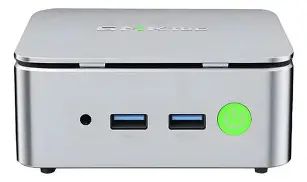
The Nucbox G10 is a compact desktop replacement or small home server platform. It typically offers a modern CPU, support for RAM upgrades, and one or more internal storage options such as M.2 NVMe and sometimes a 2.5" SATA bay (users should check the exact model and configuration before buying). Mini PCs like the Nucbox are chosen for:
- Everyday desktop tasks: web browsing, office productivity, media playback.
- Light homelab or edge server duties: small web services, media streaming, local file serving.
- Low power and small footprint deployments where a full desktop tower is impractical.
They are not primarily designed to be large‑capacity, enterprise storage hosts without additional enclosures or networked storage appliances.
Seagate Exos Mozaic M 30TB Hard Drive
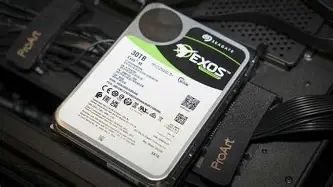
The Seagate Exos Mozaic M 30TB is a high‑capacity HDD targeted at hyperscale and archival use cases. Drives at this capacity are typically 3.5" form factor, optimized for cost per terabyte and sustained sequential throughput rather than low latency random I/O. Typical uses include:
- Cold or warm data archival in datacenters and hyperscale environments.
- Bulk backup targets for large media libraries, surveillance footage, or long‑term retention.
- Storage nodes in NAS or scale‑out systems where many drives operate together behind RAID or erasure coding.
These drives are not intended to be primary system disks for desktop responsiveness; instead they are mass storage building blocks.
Detailed analysis: compatibility, performance, and practical integration
Before deciding to add or use a 30TB Exos drive with a Nucbox G10, buyers should evaluate several practical factors: physical fit and power, interface and throughput, expected workloads, thermal and noise considerations, and management/backup strategy.
Discover deals on Laptops & Computers — updated daily.
Shop Amazon →Physical fit and power
Large capacity enterprise drives are 3.5" and require a 12V power rail. Many mini PCs either lack an internal 3.5" bay or do not provide the required SATA power connector. That means the Exos drive will usually need one of the following:
- A powered external drive enclosure or dock that supports 3.5" enterprise drives and provides proper cooling and power.
- An external NAS or small server chassis with multiple drive bays and an internal power supply.
- A dedicated compact desktop or tower that accepts 3.5" drives.
Attempting to force a 3.5" enterprise drive into a mini PC without adequate power or mounting is not recommended and may damage the device or drive.
Interface and bottlenecks
The Exos drive will expose either SATA (the common consumer/server interface) or SAS (in some enterprise SKUs) depending on the exact configuration. If connected to a Nucbox G10 via a USB‑to‑SATA adapter or external enclosure, performance will be constrained by the USB link. Typical implications:
- Sequential reads/writes for large files will be usable over USB 3.x, but expect lower throughput than a direct SATA connection or enterprise backplane.
- Random I/O performance and latency will not match NVMe SSDs. Applications that perform many small random reads/writes (e.g., databases) will suffer.
- If the mini PC only has a single M.2 NVMe slot, NVMe storage is still the best choice for OS and performance‑sensitive apps while the HDD serves as secondary capacity.
Workload fit: when the Exos makes sense
The Seagate 30TB drive is well suited to:
- Large media libraries (video archives, RAW photo collections) where capacity and sequential throughput are primary concerns.
- Backup targets where files are written relatively infrequently and read mostly for restores.
- Storing surveillance or scientific data sets with massive sequential write volumes.
It is less suited to being a system/boot drive or hosting latency‑sensitive transactional workloads.
Thermal, vibration, and reliability considerations
High-capacity drives can run warm and are sensitive to vibration when multiples are mounted incorrectly. A mini PC enclosure without sufficient airflow will shorten drive life. Enterprise drives are built for datacenter environments and may require careful mounting and cooling when used in a home or small office. Also, consider redundancy: a single large drive is a single point of failure; many buyers prefer RAID arrays or replication strategies to reduce risk.
Pros & Cons
Gmktec Nucbox G10 Mini PC
- Pros:
- Compact footprint and low power consumption for everyday computing and light server tasks.
- Fast internal options (NVMe) for responsive OS and applications.
- Quiet operation relative to full desktops; easy to place on a desk or shelf.
- Cons:
- Limited internal storage expansion for 3.5" drives; may lack multiple SATA bays.
- Thermal limits restrict sustained heavy server workloads without external cooling.
- Not optimized for storing tens of terabytes without external or networked storage.
Seagate Exos Mozaic M 30TB Hard Drive
- Pros:
- Extremely high capacity ideal for archives, backups and bulk datasets.
- Cost‑effective cost per TB compared with SSDs at the same scale.
- Designed for datacenter reliability and sustained sequential throughput.
- Cons:
- Large physical size (3.5") and power requirements make integration with mini PCs nontrivial.
- Lower random IOPS and higher latency than SSDs—poor fit for OS or transactional databases.
- A single drive is a single point of failure; redundancy planning is necessary.
Comparison table
| Characteristic | Gmktec Nucbox G10 Mini PC | Seagate Exos Mozaic M 30TB Hard Drive |
|---|---|---|
| Primary role | Compact general‑purpose computer (compute + OS + small storage) | High‑capacity bulk storage device |
| Typical capacity | Internal NVMe/SSD (up to multiple TB in M.2 form factor), occasionally 2.5" SATA | 30 TB (single drive) |
| Form factor | Small form factor chassis | 3.5" enterprise HDD; requires 12V power |
| Performance profile | Low latency, high IOPS with NVMe; good for OS and apps | High sequential throughput, lower random IOPS, higher latency |
| Power and cooling | Designed for low power; limited internal cooling | Higher power draw under load; needs cooling and vibration control |
| Typical use cases | Desktop, light server, edge compute | Archival storage, backup targets, NAS and datacenter storage nodes |
| Integration with mini PC | Native | Requires external enclosure/NAS or powered dock for use with a mini PC |
| Cost per TB | Higher (SSDs) for fast local storage | Lower for bulk capacity compared with SSDs |
Real‑world use cases and buyer concerns
Buyers approaching this decision typically fall into a few personas with different priorities:
Find top-rated Laptops & Computers products at great prices.
View Offers →- Media professional / content creator: Needs many terabytes to store raw video and project files. The Exos drive's capacity is attractive, but practicality often dictates adding it to a NAS or external drive chassis rather than installing it inside a Nucbox. The Nucbox remains valuable as a workstation for editing when paired with fast NVMe scratch drives.
- Home lab / NAS hobbyist: Wants to consolidate storage for backups, Plex libraries, or virtual machines. Many hobbyists pair a mini PC as a host for virtualization but offload large storage to a multi‑bay NAS that can accept 3.5" drives like the Exos for redundancy and easier cooling.
- Small business / backup administrator: Prioritizes reliability and long‑term retention. Large drives reduce physical drive count and can lower overall operating costs, but redundancy and monitoring (SMART, scheduled scrubs) are essential to avoid catastrophic data loss.
- Everyday user: Likely does not need 30TB; upgrading a Nucbox's internal storage to a larger NVMe/SSD or adding a modest external drive is often more practical.
Buying guide: questions to ask and steps to integrate
Before purchasing a Seagate Exos Mozaic M 30TB to use in a setup involving a Gmktec Nucbox G10, consider the following checklist and integration steps.
Checklist
- Capacity requirement: Estimate current and projected storage needs. Does the user need tens of terabytes now or over the next few years?
- Form factor and power: Confirm whether the Nucbox has a 3.5" bay and a SATA power connector. If not, plan for an external enclosure or NAS.
- Interface: Verify whether SATA or SAS is required and the available host interface on the mini PC (SATA, USB, or network).
- Performance needs: Determine whether workloads are sequential (media, backups) or random I/O (databases). HDDs excel at sequential throughput, not random IOPS.
- Cooling and mounting: Ensure adequate airflow and vibration‑secure mounting for a 3.5" drive.
- Redundancy strategy: Plan RAID or replication; avoid relying on a single large drive for critical data.
- Budget and cost per TB: Compare total cost including enclosure, backup appliances, power consumption, and potential replacement costs.
Integration steps
- Verify physical compatibility: Inspect the Nucbox G10 chassis for available SATA connectors and check the manufacturer’s documentation. If the mini PC lacks a 3.5" bay, select an external enclosure or NAS.
- Choose the right enclosure or NAS: For a single drive connected to a mini PC, a quality powered USB 3.2 or USB‑C 3.2 Gen 2 enclosure that supports enterprise drives and provides cooling is a common choice. For multiple drives and redundancy, a multi‑bay NAS is preferable.
- Format and filesystem: Select a filesystem appropriate to the environment (NTFS/exFAT for Windows compatibility, ext4/XFS/ZFS for Linux/NAS, or use a NAS vendor’s recommended format). For very large volumes and archival data, consider filesystems that support online scrubbing and checksums (ZFS, Btrfs) to detect silent corruption.
- Configure backups and redundancy: Even with a 30TB drive, plan for backup. Implement offsite replication, cloud backups for critical data, or local RAID/erasure coding in a NAS.
- Monitor drive health: Enable SMART monitoring and schedule periodic integrity checks and scrubs to catch problems early.
- Test restore process: Validate backups by performing restores; large archives can be slow to recover if not planned properly.
Alternatives and complementary approaches
If a buyer is uncertain about using a single 30TB drive, consider these alternatives:
- Multiple smaller drives in a NAS: Using several moderate capacity drives in RAID or an erasure‑coded NAS can improve redundancy and often performs better for mixed workloads.
- Tiered storage: Keep OS and active projects on NVMe/SSD in the Nucbox, and offload archives to HDDs or cloud cold storage.
- Cloud backup/archive: For some, offloading archival data to cloud storage removes the physical integration and cooling concerns, although long‑term costs and egress must be considered.
- High‑capacity external desktop drives: Desktop external DAS enclosures with integrated power supplies can simplify deployment and provide acceptable performance when paired with a mini PC.
Cost of ownership and practical considerations
Large drives lower cost per TB but bring other operating expenses: higher power draw, possible replacement costs, cooling needs, and the administrative overhead of monitoring and maintaining backups. When installed in an always‑on server or NAS, the ongoing power consumption and potential downtime impact should be weighed against initial savings on capacity.
Warranty and support are also important. Enterprise drives often come with different warranty terms than consumer drives; buyers should confirm the warranty length and RMA process for the specific Seagate model and whether the seller supports consumer returns or only business channels.
Conclusion
Upgrading from a Gmktec Nucbox G10 Mini PC to a Seagate Exos Mozaic M 30TB hard drive is not a straightforward substitution because the devices serve different functions. The Exos 30TB is an excellent choice when bulk capacity, cost per TB, and sustained sequential throughput are the buyer's priorities—particularly for archival, backup, and NAS roles. However, the physical, power and interface requirements of a 3.5" enterprise drive mean that most users will need an external enclosure or a separate NAS/server chassis to integrate the Exos with a Nucbox.
For users who need more local responsiveness and system performance, upgrading the Nucbox's internal NVMe or adding fast SSD storage is the right move. For those who need mass storage, the recommended approach is to pair the Nucbox with the Exos drive via a proper enclosure or to use a NAS, retaining the Nucbox for compute and relying on the Exos for capacity. Crucially, plan for redundancy, cooling, and monitoring—because with tens of terabytes at stake, a wise storage strategy is as important as the drive choice itself.