Why Everyone is Buying the Remarkable Paper Pro Move (Full Review)
I've been using the Remarkable Paper Pro Move for several months now, and I wanted to put together a full, honest review based on real-world use. I bought it because I was tired of juggling paper notebooks, scanning pages, and taking notes on my phone where everything felt cramped. What I found was a device that tries to blend the tactile simplicity of paper with the conveniences of a digital workspace — and in many ways it succeeds, but not without compromise.
Introduction: Why I decided to buy the Paper Pro Move
My main drivers were simple: replace the paper notebooks that pile up on my desk, read and annotate PDFs without eye strain, and have a distraction-free place to sketch and take meeting notes. I was also curious whether the improved stylus and software polish the company has been developing would actually translate into daily productivity gains. After using it for months for work, study, and creative brainstorming, I feel qualified to share the good, the bad, and the in-between.
Unboxing and first impressions
Right out of the box, the Paper Pro Move felt familiar if you've ever held a high-end e-ink notepad: thin, matte, and intentionally minimal. I appreciated the understated design — no flashy logo or unnecessary bling. The stylus felt balanced in my hand and the folio I bought alongside it provides decent protection without adding too much bulk.
Initial setup was straightforward in my experience. The device paired with my phone and laptop, and the onboarding tutorials were short. I liked that the company assumes you know how to hold a pen but still guides you through the essential gestures and export options.
Daily use: Notes, drawing, and reading
Writing feel and stylus
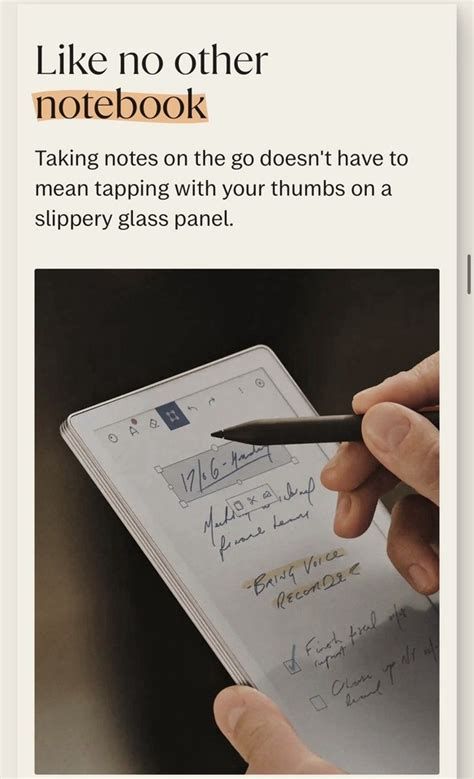
The promise of a paper-like writing experience is what sold me — and it largely delivers. The screen texture provides a subtle tooth that mimics paper enough that my handwriting felt natural. For handwriting latency, I noticed improvements over earlier models I've tried: strokes appear fluid and mostly without the jittery lag that plagued older e-ink devices. That said, extremely fast, tiny strokes (like quick shorthand or some hatching techniques in sketching) sometimes show a hair of latency compared to high-refresh tablets. It rarely disrupted my workflow, but artists who rely on ultra-responsive brushes might notice.
The stylus is precise and doesn't need charging in the same way as battery-driven pens do; I appreciated not having to recharge it constantly. However, the tip does wear over time — after months of heavy note-taking and sketching I replaced the nibs to keep the exact same feel. A small disappointment: replacement nibs are an extra purchase and the included ones feel softer than I prefer, so I switched to firmer tips.
Note-taking, organization, and conversion
I mostly use the Paper Pro Move for meeting notes and project planning. The notebook templates and page layouts are thoughtful: lined, dotted, grid, and several planner templates. I liked how easy it was to create a new notebook and duplicate pages. Search within handwriting is decent — it successfully recognizes most of my printed handwriting and converts to editable text at a rate that surprised me the first time. That said, my messy cursive still confuses it, so expect to tidy some converted text afterwards.
Find top-rated Electronics products at great prices.
Browse Now →Syncing with the cloud has been reliable in my time with the device. I set it to sync automatically when connected to Wi‑Fi and found my notes available on the companion apps within minutes. Export options cover the essentials: PDF, PNG, and editable text. For someone who regularly sends annotated PDFs back and forth, the Paper Pro Move made that a painless part of my workflow.
Reading and annotations
For long-form reading, I prefer the e-ink display over backlit screens. I noticed less eye strain during extended reading sessions, and the matte display reduces glare during daylight hours. PDF rendering is good — complex documents rendered without the major lag that used to frustrate me on older devices. The annotation tools are simple and effective for highlighting and scribbling notes in the margins.
One caveat: very large, graphic-heavy PDFs (think full-color design decks) can still be sluggish when you zoom and pan aggressively. For most academic papers and contracts, however, performance has been excellent.
Software, updates, and ecosystem
The software on the Paper Pro Move is focused and intentionally limited. It doesn't try to be an app store hub �� that's both a strength and a weakness. I appreciated the distraction-free environment: no social apps or notification clutter. That focus helped me form a consistent daily routine of reading and writing.
Updates rolled out during my ownership and usually brought small but noticeable improvements: better handwriting recognition, improved PDF handling, and minor UI tweaks. Support for cloud integration covered the mainstream services I use, and exporting/syncing with my computer was predictable. On the downside, the platform still lacks some of the advanced integrations power users might crave, like seamless two-way calendar annotation or deep integration with my task manager without manual export/import steps.
Battery life and hardware reliability
Battery life is one of the Paper Pro Move's strong suits in my experience. With a mix of note-taking, occasional PDF reading, and syncing a couple of times a day, I comfortably got multiple days to a week of use between charges. I typically charge it every 5–7 days depending on intensity. Charging is relatively fast compared to older e-ink devices but slower than modern LCD tablets — which I consider a fair trade for the extended battery life.
I've noticed very little heat from the device under normal use, and the build feels solid. The folio protects the screen and the hinge has been durable through daily open/close cycles. After several months of use I haven't seen any screen ghosting issues that sometimes affect e-ink, which was a relief.
Shop the latest Electronics picks on Amazon.
Browse Now →What I appreciated most
- Paper-like writing experience: The combination of screen texture and pen responsiveness made most of my note-taking feel natural.
- Distraction-free focus: Without an app store full of distractions, I found myself using it more intentionally.
- Reliable syncing and exports: Getting notes onto other devices and into workflows was predictable and simple.
- Comfortable reading experience: Long reading sessions were easier on my eyes than on backlit tablets.
- Long battery life: Several days to a week of use made it convenient for travel and daily carry.
What bothered me
- Limited app ecosystem: The lack of third-party apps or deep integrations meant I had to build workarounds for some workflows.
- Stylus nib wear and extras: Nib replacements felt like an expected ongoing cost and the softer stock nibs weren't my favorite.
- Handwriting conversion limitations: My messy cursive requires cleanup after conversion; it’s not a perfect one-click solution.
- Performance with very large PDFs: Heavy, graphic-rich files can be slower to navigate at times.
- Price vs. function trade-off: If you need a full tablet with apps, this feels like a niche purchase and a pricey one for what it does.
Comparison: Paper Pro Move vs common alternatives
| Feature | Paper Pro Move | Traditional e-ink notepad | Multipurpose tablet (LCD) |
|---|---|---|---|
| Writing feel | Very paper-like with textured display and precise stylus | Paper-like but often less responsive | Smoother surface, different feel (glass) — uses haptic/pen tech |
| Distraction level | Very low — focused environment | Very low | High unless restricted (notifications, apps) |
| App ecosystem | Limited, focused tools | Minimal | Extensive (apps, multitasking) |
| PDF handling | Strong for typical documents; slower on very large files | Basic | Excellent performance with zoom & color |
| Battery life | Multi-day to week | Multi-day to week | Hours to a day |
| Best for | Serious note-takers, readers, distraction-free workers | Paper replacement for simple notes | Power users needing apps, media, and color |
Buying guide: Who should consider the Paper Pro Move?
In my experience, the Paper Pro Move fits a specific profile of user well. Below are the key points I considered when deciding whether to keep it and that I recommend you weigh before buying.
Consider this if you:
- Value a true paper-like handwriting experience and often write by hand for work or study.
- Read a lot of PDFs, articles, or drafts and want a comfortable e-ink reading surface.
- Prefer a distraction-free device for focused thinking, planning, and note-taking.
- Want reliable, straightforward syncing and export options to keep notes accessible across devices.
Maybe skip this if you:
- Need a device that runs many apps or consumes media in color — a multipurpose tablet is better.
- Rely on perfect handwriting-to-text conversion with messy cursive; you’ll still need to proofread.
- Are very price-sensitive and want the most features for the lowest cost — there are cheaper options with compromises.
Accessories and extras I recommend
- Firmer nibs: I switched nibs to get a slightly crisper pen feel; it made sketching more enjoyable.
- Protective folio: A slim folio keeps the device safe without making it bulky.
- Screen care cloth: The matte surface attracts little dust, but I still keep a microfiber cloth handy for smudges.
- Stylus holder or sleeve: If you travel, a small pen sleeve prevents me from losing the stylus in a bag.
Price and value — how I think about the cost
Price always comes down to perceived value. For me, the Paper Pro Move justified its cost because it replaced a stack of notebooks, simplified my PDF workflow, and reduced screen fatigue from late-night reading. That said, if you expect a tablet replacement for everything (video, games, many apps), you may feel the price is steep for the functionality provided. Personally, I view it as a specialized tool — expensive, but worth it for the focused benefits I use daily.
Final verdict and conclusion
After several months with the Paper Pro Move, my overall impression is positive. In practical terms, it did what I bought it for: it replaced a pile of paper notebooks, made my reading sessions easier on my eyes, and gave me a calm, distraction-free space to work. I noticed tangible changes in how I organize ideas — I draft, annotate, and export more often, and I actually revisit my notes because they’re searchable and accessible.
That said, this isn't a perfect device. The trade-offs are real: a limited app ecosystem, some hiccups with very large files, and small ongoing costs like nib replacements. If your workflows depend on a broad app library, or you need the absolute fastest pen responsiveness for professional digital art, this might not be the best primary device. But for focused note-taking, reading, and long-form thinking, the Paper Pro Move has become a valued tool in my daily routine.
In my experience, if you want fewer distractions, a tactile writing surface, and reliable note management, the Paper Pro Move is one of the most convincing devices of its kind I've used. It won't replace every gadget you own, but for the specific job of helping you think clearly on a screen that feels like paper, it succeeds admirably.